method · 9 min read
Buccal massage in Houston — what it actually does, anatomically
The intra-oral technique that's taken over TikTok, explained the way a clinical practitioner explains it.
By Zhanna Graeff · April 8, 2026 · Updated September 5, 2026
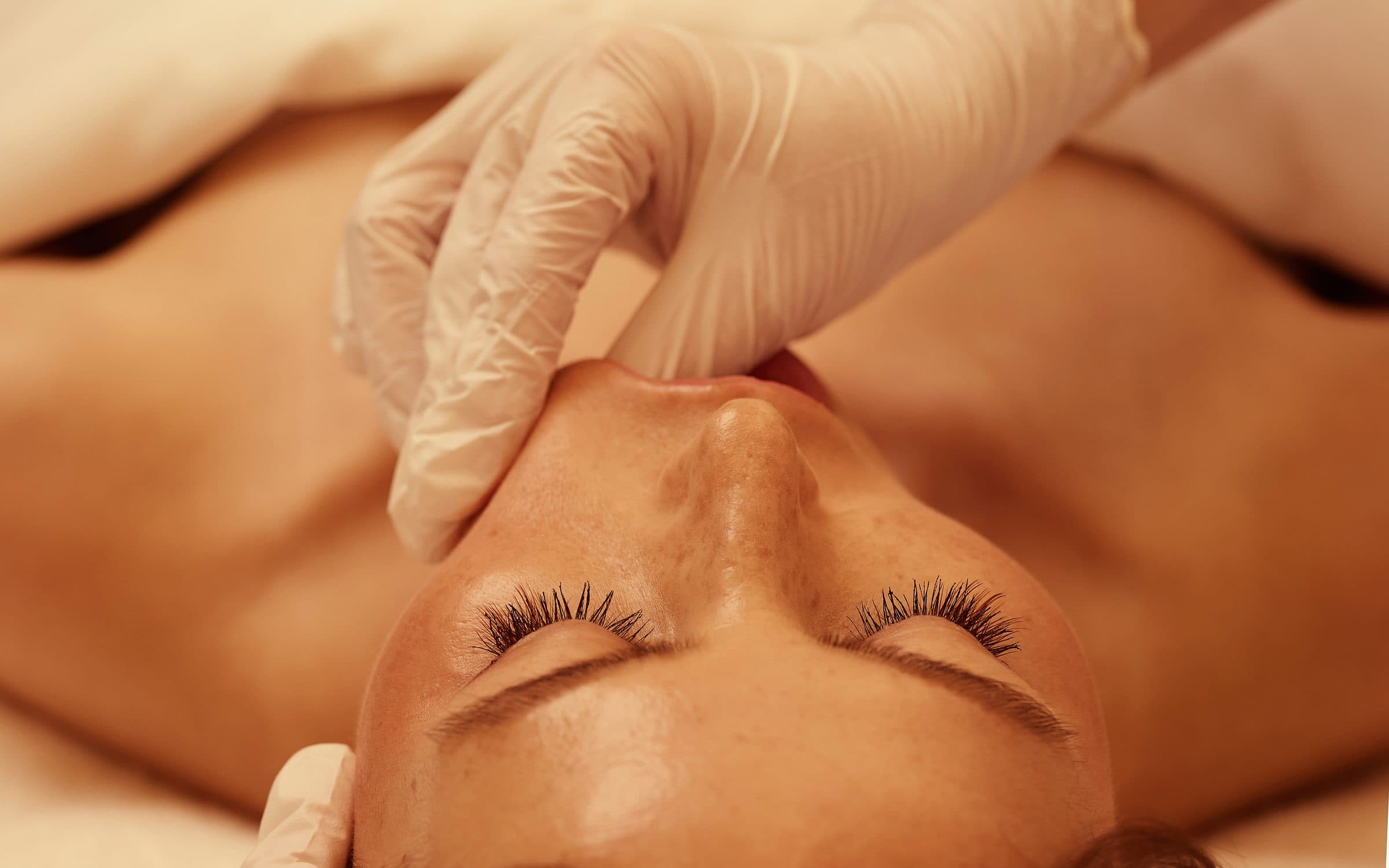
Most facials work the outside of the face. Buccal massage works the inside. Gloved fingers reach into the cheek and address the muscles that no topical pressure can find — the pterygoid plate, the deep masseter, the buccinator, the fascia that lines the inside of the cheek.
This sounds dramatic. In practice it isn't. The first three minutes are exploratory — Zhanna mapping where you hold tension. By minute ten, most clients are visibly slack-jawed; by minute thirty, they're falling asleep. The masseter — the muscle you clench when you're angry, when you're concentrating, when you're sleeping badly — releases under sustained pressure in a way that no external work approximates.
The pterygoid is the muscle behind the temporomandibular joint. Tight pterygoids feel like a constant low-grade ache that nobody can locate. Most clients have been to a dentist about it, a chiropractor about it, sometimes a physical therapist about it. They've tried mouthguards. They've tried magnesium. The pterygoid lives behind the upper second molar. The only way to reach it manually is from inside the mouth.
The buccinator is the cheek muscle itself. Decades of expression — smiling, talking, eating — leave it shortened. Buccal work lengthens it. The effect on the visible architecture of the face is real and immediate: softer nasolabial folds, defined jawline, a face that looks less held.
The technique isn't new. It's standard in French, Russian, and Eastern European facial massage curricula and has been for half a century. What's new is its arrival on the American beauty market — usually marketed as "buccal facial massage" or "intra-oral lifting," and frequently performed by practitioners with two weekends of training. The work has a learning curve. The pterygoid in particular is anatomically subtle and easy to miss or to hurt.
What to look for in a practitioner: licensure (Texas requires esthetic licensing), training that includes manual technique rather than only product application, and a willingness to explain the anatomy in the room. If you can't get a coherent answer about which muscles are being worked, the answer is probably "we read a blog post and bought gloves."
Vera Pelle has been performing buccal work as a primary service since 2022. The training is Russian — Zhanna flew to Moscow during COVID specifically for this discipline. The structural results are why most clients book a six-session series instead of a single appointment.
Continue reading
Want to book the treatment this piece is about? See the service page →
Pairs with
From the shelf & the menu.
Pelle Vista
Get the next one in your inbox.
Monthly at most. From the treatment room itself.