treatments · 3 min read
Why the hands-on facial is coming back
Facial menus have relied on devices for a decade, and more clients now ask for manual work. What hands can do that a device cannot, and where devices do better.
By Zhanna Graeff · November 17, 2026
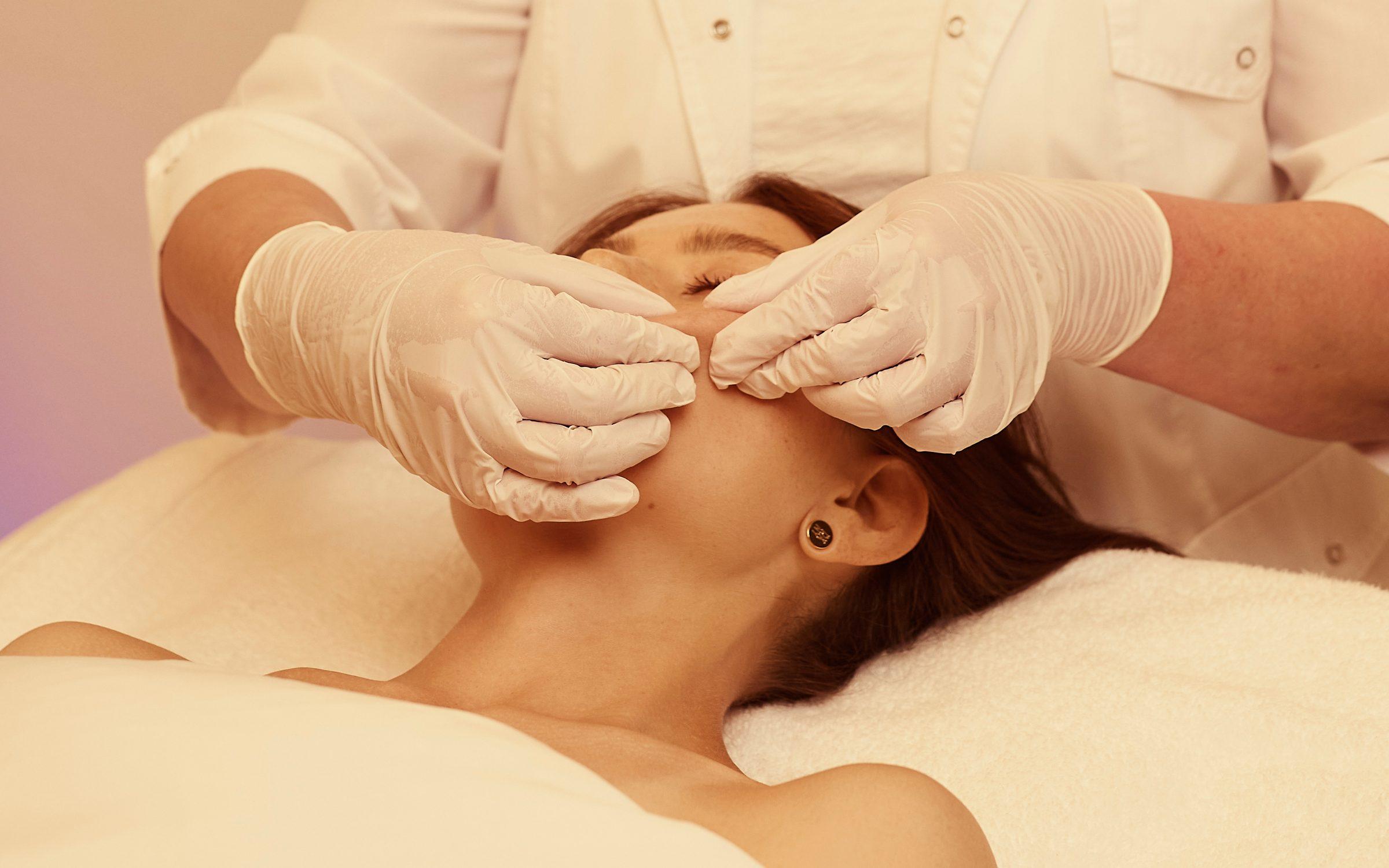
For about ten years the facial menu at most American spas has been a list of machines: microcurrent, radiofrequency, LED panels, branded hydradermabrasion systems. Some are very good. I use hydradermabrasion myself in Idro-Pulizia Clinica, and it stays on my menu.
This year more new clients ask whether a session is done by hand. Many have seen buccal and lymphatic work online, have had facials where the esthetician mostly held a wand, and want a manual treatment instead.
What a hand does that a device cannot
A device delivers a set pass: a fixed current, a fixed suction, a fixed speed. It does the same thing to the left masseter as to the right, although the two sides of a face are rarely the same.
Most people chew on one side and sleep on one side. One cheek holds more fluid. One side of the jaw is tighter. By hand I can find these differences in the first minute and adjust: more time on the tight side, lighter strokes over a congested node, slower pressure where fascia has bound down. Adjusting to each side of the face is central to the European method, and it is what that training teaches.
Where I trained
I trained in Moscow, where facial massage is taught as anatomy: which muscle, which direction, how much pressure the lymph vessels tolerate before they collapse. Then I trained again at Ogle School for my Texas license. The two trainings were different in many ways. Both required a working knowledge of the anatomy under the hands.
Where devices do better
Devices do some jobs better. Hydradermabrasion clears and exfoliates the surface more evenly than any manual technique, and it carries a serum into skin that has just been cleared. The ultrasonic derma scrubber in the Deep Clean Facial loosens congestion so extractions are gentler. When a session needs surface work, I use the tool.
The best sessions use both in the right order: decongest by hand first, so the surface work is not working against retained fluid, then resurface, then finish by hand.
What to ask before you book a hands-on facial, anywhere
- How much of the session is manual, in minutes?
- Who performs it, and where did they train in facial massage specifically?
- Do they review a health intake first? Intra-oral and lymphatic work both have contraindications.
- Will they explain what they are doing and why?
At Vera Pelle I perform every session myself. The Zhanna Method is the full manual protocol: ninety minutes of lymphatic drainage, gua sha, buccal, myofascial and European face lifting, performed entirely by hand.
Frequently Asked
The questions clients actually ask.
- What is a hands-on facial?
- A facial where most of the session is manual technique, such as massage, lymphatic drainage and muscle and fascia work, rather than devices. The European tradition puts the hands at the center of the treatment.
- Are hands-on facials better than device facials?
- They do different jobs. Manual work decongests and releases muscle and fascia. Devices such as hydradermabrasion clear and exfoliate the surface evenly. The best sessions use each for what it does well, in the right order.
Continue reading
Want to book the treatment this piece is about? See the service page →
Pairs with
From the shelf & the menu.
Pelle Vista
Get the next one in your inbox.
Monthly at most. From the treatment room itself.